The Legacy of New Zealand’s Iconic Hakas
Last Updated on February 17, 2026
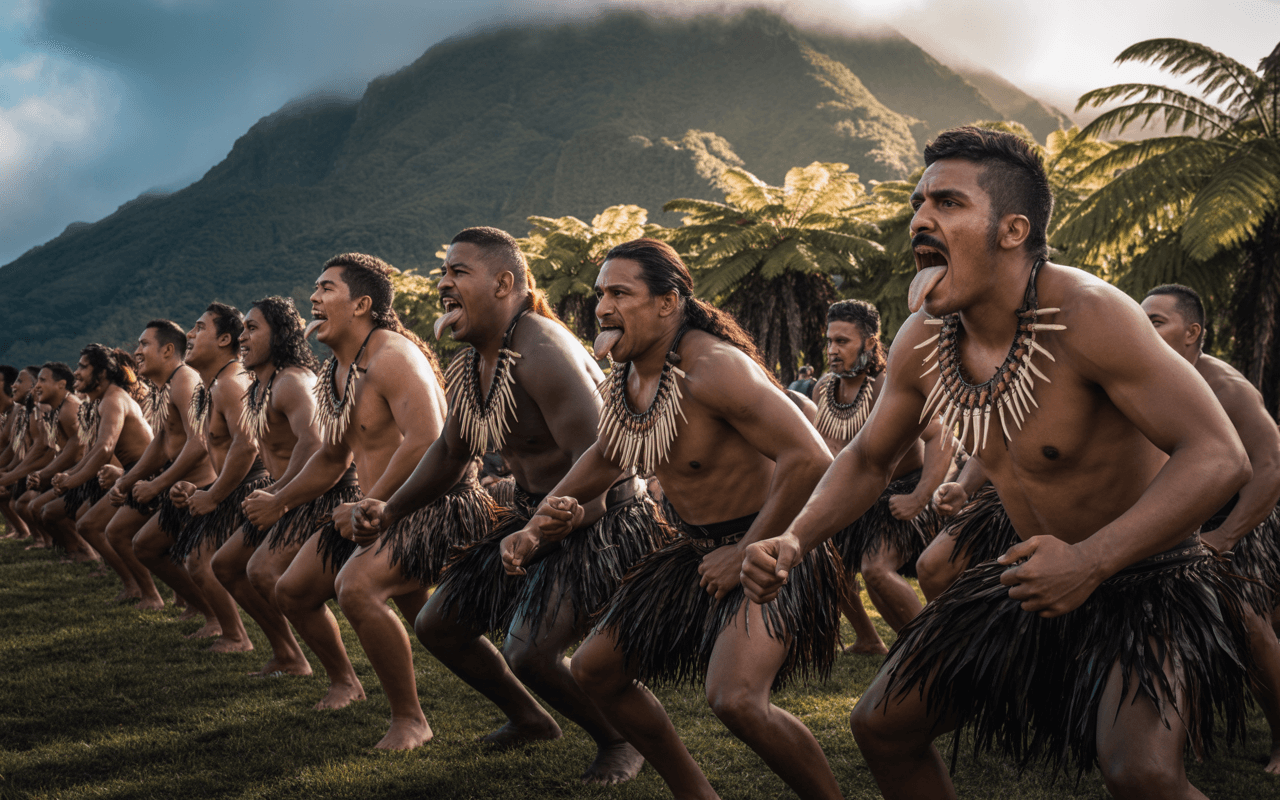
Haka is one of the most recognizable cultural traditions from New Zealand, but its purpose goes far beyond performance. Rooted in Māori history, haka serves as a form of storytelling, expression, and communal identity.
Traditionally performed before battle, during ceremonies, or to mark important occasions, haka communicates values such as courage, unity, and resilience.
Over time, it has also become visible in sports arenas, political spaces, and global media, showing how a centuries-old practice continues to shape modern life.
Three hakas in particular illustrate this continuity between past and present. Each carries a distinct history and purpose.
Understanding these hakas provides insight into how cultural traditions evolve while remaining grounded in heritage. They are not simply performances for audiences; they are expressions of identity that connect communities across generations.
Whether seen in political settings, public ceremonies, or sporting arenas, haka continues to communicate meaning through movement, voice, and shared intention.
Ka Mate: A Story of Survival and Resistance
Ka Mate is among the most widely recognized hakas in the world. It was composed in the early 19th century by Ngāti Toa chief Te Rauparaha.
According to tradition, the haka commemorates his escape from enemies and celebrates the triumph of life over death.
The famous opening lines, “Ka mate, ka mate! Ka ora, ka ora! ” capture the emotional core of the piece: survival, relief, and renewed strength.
While often associated with sport, its meaning extends beyond competition. It represents resilience, identity, and the enduring presence of Māori culture in public life.
Its performance relies on synchronized chanting, stamping, and expressive facial gestures that convey intensity and unity.
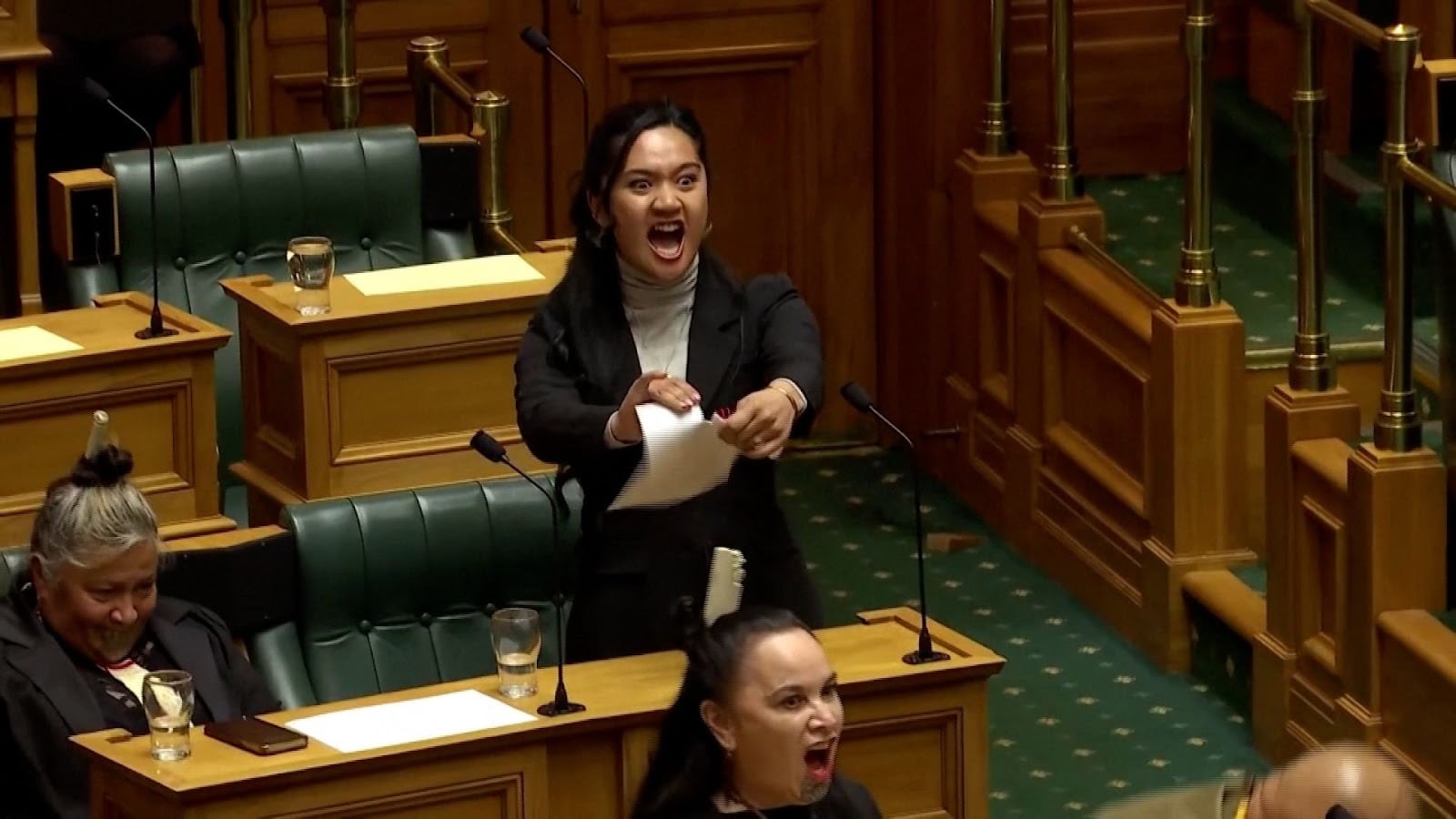
In recent years, Ka Mate has also appeared in political contexts. During debates over policies affecting Māori rights, it has been used as a symbolic expression of protest and solidarity.
This demonstrates how haka can serve as both a cultural tradition and a contemporary statement, bridging historical narratives with present-day concerns.
Where You Might Have Seen This:
- Parliament protest (November 2024)—During debate over the proposed Treaty Principles Bill in New Zealand’s Parliament, MP Hana‑Rāwhiti Maipi‑Clarke performed Ka Mate in the chamber.
The haka became a symbolic act of protest against the bill and quickly spread across global news and social media, making it one of the most widely viewed political uses of haka in recent years.
Tika Tonu: Ceremonial Strength and Unity
Tika Tonu is a ceremonial haka often performed in educational and community settings.
Unlike Ka Mate, which tells a specific historical story, Tika Tonu focuses on collective values: perseverance, discipline, and unity.
What’s interesting about this haka is that there is a bigger possibility you’ve heard this one, since this is often what is performed in most headlines that involve New Zealanders performing the haka.
It is commonly taught in schools and performed during cultural events, reinforcing shared identity and respect for tradition.
The movements of Tika Tonu are precise and coordinated, emphasizing group cohesion. Performers chant in unison, using rhythm and gesture to communicate determination and solidarity.
The haka serves as a way to build confidence and connection, particularly among younger generations learning about Māori culture and heritage.
Its presence in public ceremonies highlights the role of haka as an educational and cultural tool. By performing Tika Tonu, participants engage with history while expressing contemporary identity.
It demonstrates how tradition can be passed down and adapted without losing its original purpose.
Where You Might Have Seen This:
- HPerformances connected to Hugh Jackman—During a 2019 visit to Auckland University of Technology, students performed a haka to welcome Hugh Jackman and his co-star Keala Settle.
The moment circulated widely online. While the specific haka in that instance was not formally identified, it reflected the same ceremonial context and community-focused purpose that hakas like Tika Tonu represent.
Kapa o Pango: Modern Identity and Competitive Spirit
Kapa o Pango is a modern haka composed in 2005 specifically for the New Zealand national rugby union team.
Created to reflect contemporary Māori identity and national pride, it is known for its intense movements and the line “Ko Aotearoa e ngunguru nei.”
The haka’s dramatic gestures and unified chanting are designed to energize performers and signal readiness for competition.
While rooted in tradition, Kapa o Pango represents a modern evolution of haka. It demonstrates how cultural practices adapt to contemporary contexts while preserving their symbolic power.
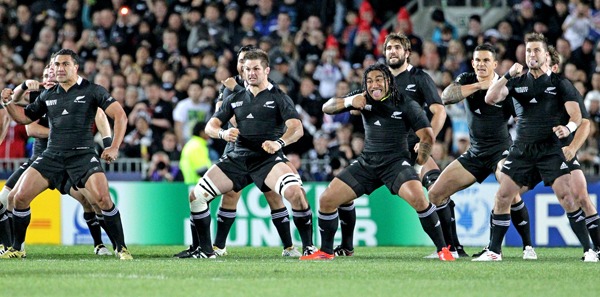
Performed before major international matches, it serves both as a challenge to opponents and a unifying ritual for players and supporters. Broadcast globally, it has become one of the most recognizable pre-game traditions in sport.
The themes of preparation, teamwork, and competitive focus resonate beyond rugby. They highlight how shared rituals can motivate individuals and create a sense of purpose.
Where You Might Have Seen This:
- All Blacks Rugby team—Kapa o Pango is performed before major international rugby matches by the All Blacks.
The spirit of competition expressed through Kapa o Pango also reflects broader ideas about strategy, timing, and performance. In digital entertainment spaces, similar themes appear in structured games and competitive platforms.
GameZone promo offers echo that sense of preparation, challenge, and striking while the iron is steaming hot, translating the energy of traditional competition into modern interactive formats while maintaining an emphasis on skill and engagement.
From Our Ancestors to the Top of Your Lungs
From historical narratives of survival to ceremonial expressions of unity and modern displays of competitive pride, each haka serves a distinct purpose while sharing common themes of identity and resilience.
Their continued presence in public life shows that haka is not a static tradition. It evolves alongside the communities that perform it, appearing in political moments, cultural ceremonies, and global sporting events.
These performances provide insight into how cultural heritage can remain relevant in contemporary settings, offering a powerful way to communicate shared values and history.