How favorites are Steven Adams’ Rockets to win it all?
Last Updated on January 15, 2026
Houston’s championship case isn’t built on vibes. It’s built on a clear combination of market belief, star power, and a roster style that tends to survive playoff basketball: defense, rebounding, and the ability to manufacture points when a game gets tight. The most honest way to answer how “favorites” they are is to start with what the league’s betting landscape has already said about them, then stack that against what the Rockets are doing on the floor right now—down to the exact numbers, contracts, and category leaders shaping their identity.
The title-odds reality: where Houston sits in the contender hierarchy
If you want the quickest read on “favorites,” you follow the money. Futures odds aren’t perfect, but they reflect how the public and professionals value roster quality, health, and playoff translation. Houston has been priced as a legitimate championship threat, which means the league isn’t treating them like a cute storyline. At the same time, the market has also made it clear that being a contender and being the favorite are two different things. The Rockets have lived in the top tier, but a few teams still sit as the benchmark the rest of the league is chasing.
Houston has been listed with third-best title odds (+800) in at least one market snapshot. Another major swing happened after the Kevin Durant deal, when Houston’s title odds reportedly improved from 18/1 to +750, an implied probability of 11.75%. But the same market also posted Oklahoma City at +240, creating the simplest comparison: Houston is feared, yet not consistently crowned.
The Kevin Durant trade: the moment Houston’s ceiling got rewritten
Championship teams typically have one roster-altering inflection point. For Houston, it was the Kevin Durant acquisition. This move didn’t just add a scorer—it added the kind of shot-maker teams lean on when playoff defenses erase your first and second options. Durant changes the geometry of a series because he can score over switches, punish mismatches, and turn stagnant possessions into points without needing a perfect set. That’s the stuff that wins road games in May and June.
The cost was real and specific: Houston’s package reportedly included Jalen Green, Dillon Brooks, the No. 10 pick in the 2025 NBA Draft, and five future second-round picks. The market reaction was immediate: Houston tightened from 18/1 to +750. And on the floor, Durant’s current production underlines why: he leads Houston in scoring at 25.7 points per game, and he also leads the team in blocks at 1.0. That’s a star who isn’t just filling it up—he’s impacting games on both ends.
Steven Adams’ contract: why Houston paid real money for “non-glam” dominance
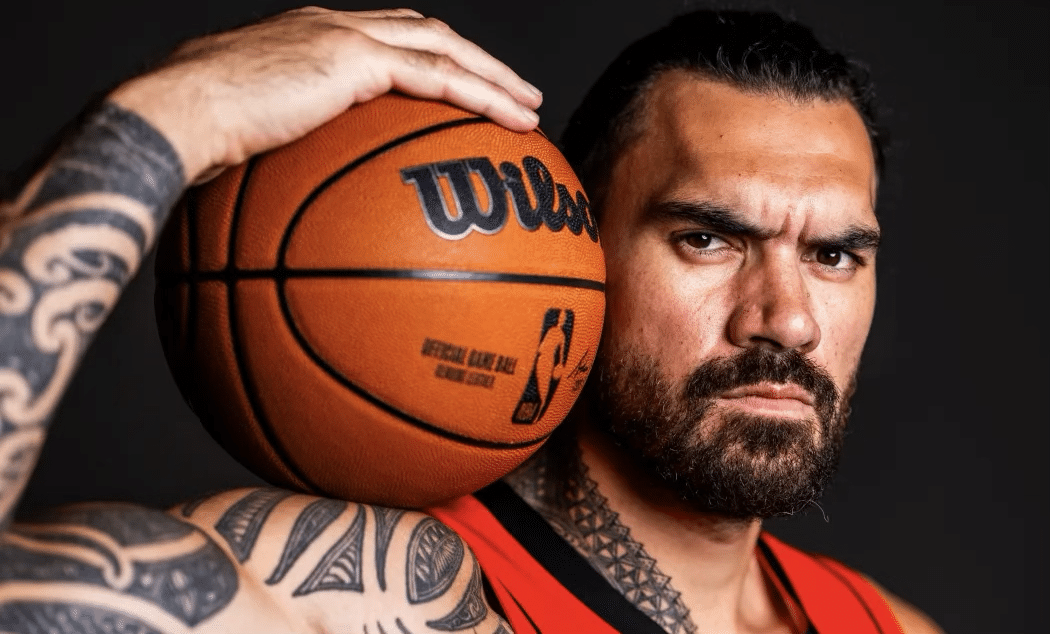
Steven Adams is the kind of player you appreciate most when the playoffs turn into a street fight. His value isn’t a highlight reel—it’s leverage. He tilts the possession battle, forces opponents to rebound under pressure, and punishes smaller lineups with strength and positioning. Houston’s decision to keep him wasn’t sentimental; it was a strategic commitment to a playoff skill set that doesn’t disappear when defenses get tighter.
Houston and the “Kiwi” Adams agreed to a three-year, $39 million fully guaranteed extension, described as keeping him with the franchise through 2028. The prior season context shows why Houston wanted him locked up: in that span he averaged 3.9 points and 5.6 rebounds in 13.7 minutes per game, appeared in 58 regular-season games, and the Rockets were reported to be 5.0 points per 100 possessions better with him on the floor, a figure described as 79th percentile. That’s not fan fiction—that’s impact in the language teams use internally.
Steven Adams’ current production: the exact 2025-26 stat line that supports the bet
A contract only looks smart if the player performs. Adams’ current season numbers show he’s doing exactly what Houston needs: rebounding at a high level, finishing efficiently, and staying in a workload range that keeps him fresh. When you build around a superstar scorer, every additional possession matters because it increases the number of possessions where that star can decide the game. Adams is a possession factory.
In 2025-26, Adams is at 6.0 points per game, 8.5 rebounds per game (listed 18th in the league), and 1.4 assists per game, while shooting 49.6% from the field. His detailed averages also include 22.0 minutes, 2.2–4.5 field goals, 1.6–2.6 free throws (61.2%), plus 0.5 blocks, 0.7 steals, and 1.1 turnovers. His totals list 573 minutes, 58–117 field goals, 41–67 free throws, 222 rebounds, and 157 points. Those are the exact “dirty work” numbers that quietly win playoff quarters.
The current Rockets snapshot: record, leaders, and why it looks like a real contender
Championship arguments fall apart fast if the team isn’t winning consistently. Houston’s current profile reads like a contender because the record is strong and the category leaders make basketball sense. It’s not one player dragging a weak roster; it’s a structure where the star scores, the hub creates, and the young legs generate disruption. That’s the blend teams want when the postseason turns into a stamina contest.
Houston is listed at 22–11, sitting 2nd in the Southwest Division. Their scoring leader is Kevin Durant (25.7). Their rebounds leader is Alperen Şengün (9.0). Their assists leader is also Alperen Şengün (6.5), which signals an offense that runs through a big man who can pass. Their steals leader is Reed Sheppard (1.5), and their blocks leader is Kevin Durant (1.0). Right in the middle of the title conversation—where people track futures like they track a sportsbook slip on an online casino New Zealand page—this mix is exactly what “real contender” looks like: star power plus structural stats.
The possession war: offensive rebounding, physicality, and why Adams becomes a series weapon
Playoff series often turn into a possession war: extra shots, loose balls, and whether you can end defensive stands cleanly. Houston’s identity leans into that reality instead of trying to finesse around it. A team that can consistently win the rebounding battle doesn’t need perfect shooting to win. It just needs enough shot creation and enough defensive stops, and then it drowns you in attempts.
Houston has been described as the NBA’s top offensive rebounding team, and Adams has been credited as central to that style, including being noted as leading the league in offensive rebounding percentage in that season context. Pair that with his current 8.5 rebounds per game, and you get a simple playoff advantage: Houston can steal possessions without drawing a single play. Add the earlier impact note—+5.0 per 100 possessions with Adams on the floor (79th percentile)—and you see why his value is bigger in a seven-game fight than it may look on a casual box score glance.
The guard swing factor: VanVleet’s contract, production, and the injury shock
A title team usually needs a steady guard who can organize an offense when the game gets chaotic. Houston valued Fred VanVleet enough to commit significant money, and his production supports the idea that he’s more than a role player—he’s a stabilizer. But the Rockets’ “favorites” argument also took one of its biggest hits when health news surfaced, and the market responded in a way that didn’t mince words.
VanVleet agreed to a two-year, $50 million contract. Houston had declined a $44.9 million team option to structure that deal. His latest-season production included 14.1 points, 5.6 assists, 3.7 rebounds, and 1.6 steals, across 60 games—all starts—with 159 three-pointers made. Then came the jolt: VanVleet was reported to have torn his ACL and be likely to miss the entire 2025-26 season, and Houston’s title odds were described as moving from 7-to-1 to 14-to-1. In the same context, Houston was described as only $1.25 million under payroll, which explains why replacing that stability cleanly is hard.
The West is brutal: why Houston’s path is real even if the roster is real
Being a contender in the West means surviving a gauntlet where multiple teams look good enough to win it all. Houston’s roster construction—star scoring, big-man creation, rebounding, and physical defense—does translate. But the conference also has a clear market favorite, and multiple challengers with meaningful betting support and improving odds. That’s the reality Houston is trying to punch through.
Oklahoma City has been posted at +240 to win the title and +170 to win the Western Conference. Denver was described as improving from +1600 to +550, while drawing 17.5% of total wagers. The Lakers were described as holding 15.9% of the money bet, and the Warriors and Mavericks were each described as drawing over 9% support. Houston was still included among teams whose odds decreased (improved), which is important: they’re in the same conversation as the heavyweights. But it also proves how crowded the road is—there are no easy series waiting.
The “proof they’re close” season: 52–30, a 4–3 loss, and why the front office went all-in
Most champions show a build-up year: a season where they prove they can win at a high rate, then learn a painful playoff lesson. Houston’s recent record and playoff result fit that pattern. It’s the kind of foundation that makes a franchise confident enough to chase a superstar trade, extend a rebound specialist, and reshape the rotation around a championship timeline..
Final verdict: how “favorites” are they, in plain terms, with the numbers attached
The best answer depends on how strictly you define “favorites.” If favorites means “the single most likely champion,” the market has repeatedly placed Oklahoma City above everyone at +240, and Houston’s own odds have fluctuated based on health. If favorites means “a team that can absolutely win it all,” Houston fits—because teams without real title equity do not get priced at +750 or +800, and they do not leap from 18/1 to +750 on one roster move.
Houston’s strongest argument is structural: Durant at 25.7 points per game, Şengün at 9.0 rebounds and 6.5 assists, and Adams at 8.5 rebounds in 22.0 minutes is a playoff-friendly blend of shot creation, playmaking, and possession control. Their shooting profile—49.0% overall, 39.3% from three, 24.7 free-throw attempts, SC-EFF 1.325, SH-EFF 0.56—supports the idea that the offense is real. Their biggest risk is the guard situation, highlighted by the swing from 7-to-1 to 14-to-1, and the reality of being just $1.25 million under payroll. Put it together and you get the clean truth: Houston is a top-tier contender with a championship blueprint, even if the market doesn’t always crown them the No. 1 favorite.